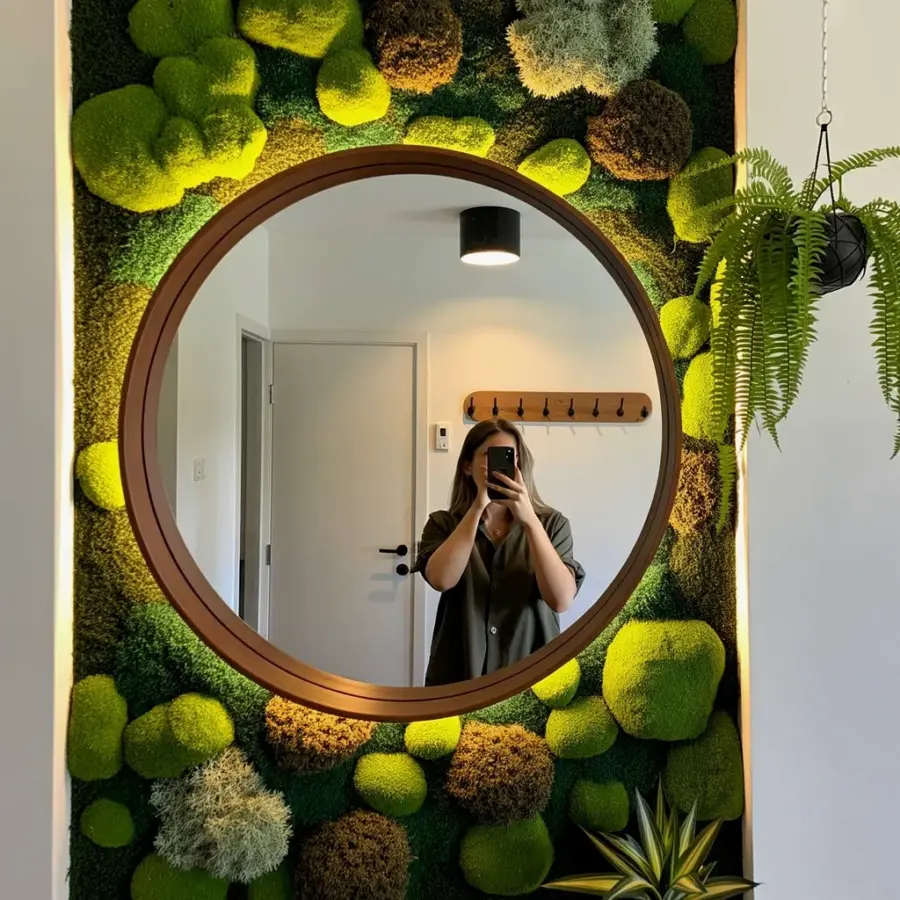
If you’re searching for entryway Japandi lighting ideas, you’re probably after that sweet spot between warm, welcoming light and clutter-free design. I love how the Japandi aesthetic takes the best of Scandinavian coziness and Japanese minimalism, creating entryways that feel like a deep breath the moment you walk in. The right lighting can make a small foyer or mudroom feel larger, calmer, and inviting without turning into a showroom. Let’s walk through a few curated themes that actually work for real homes.
Soft Pendant Lamps for a Floating Glow
Pendant lamps are my favorite trick for adding light without taking up floor space. In a Japandi entryway, you want something that hangs low enough to create a focal point but not so low that you bump your head. Look for pendants made of natural materials like rice paper, unglazed ceramic, or light wood. A round, paper shade in off-white or warm beige casts a diffused glow that softens the whole space. I personally like a single pendant centered over a small console table. It draws the eye down and makes the entry feel intentional. For a mudroom with a bench, try a slightly wider shade hung a bit higher. Just avoid anything too glossy or metallic – that kills the serene vibe.
Wall Sconces in Bamboo and Natural Wood
Wall sconces are perfect for narrow hallways or entryways where you can’t fit a table or lamp. In Japandi style, less is more, so choose sconces that are flat against the wall or gently curved. Bamboo frames with linen or cotton shades add texture and warmth. I’ve seen beautiful ones that look like woven baskets – they filter light into a lovely pattern on the wall. Positioning them at eye level on either side of a mirror or artwork creates balance. If your entryway is very small, one sconce near the door is enough. A dimmer switch is a game changer here. You can adjust from a bright welcome for guests to a soft nightlight for late arrivals.
Paper Lanterns and Washi Shades
Paper lanterns often get written off as too trendy or fragile, but a good washi paper shade is actually durable and gives the most diffused light. For a Japandi entryway, think oversized globe or cylinder shapes in cream or light grey. I hang a washi pendant in my own tiny foyer and it instantly makes the space feel taller and airier. You can also use smaller paper lanterns on a shelf or above a coat rack. Just be careful with bulbs – use LEDs that stay cool to avoid scorching the paper. Stick to a warm white around 2700K. The goal is a soft, tactile glow that feels like late afternoon, not a harsh spotlight.
Minimalist Floor Lamps for Corner Light
Not every entryway has a ceiling fixture, and that’s where a floor lamp steps in. Japandi floor lamps are lean and unadorned – think a slim wooden pole with a simple conical shade. Place one in a corner where it can wash the wall with light and highlight a plant or a small stool. I avoid tripod lamps because they take up too much visual space. Instead, look for a single stem lamp with a fabric shade that directs light upward or downward. An uplight emphasizes ceiling height, while a downlight creates a cozy reading nook by the door. Go for a lamp with a pull chain or foot switch so you don’t have to fumble in the dark after a long day.
LED Strip Lighting for Hidden Warmth
This one feels a bit modern, but done right, LED strips fit seamlessly into Japandi. The trick is to hide them under a console table, behind a floating shelf, or inside a shallow niche. The light bounces off the wall rather than shining directly in your eyes. Use a warm white strip with a high color rendering index (90+) so wood tones and neutral paint look rich. I installed a strip under my entryway bench and it makes putting on shoes feel less like a chore. You can also put one along the baseboard for a subtle night path. Avoid RGB or cool white – stick to a single warm tone. Dimmable strips are ideal because you can set the mood for morning or evening.
Candle Holders and Accent Lighting
Sometimes the best light is the one you don’t wire in. A few well-placed candle holders or small lanterns on a shelf or windowsill add a living, flickering warmth. Choose ceramic or wood holders in muted earth tones. I keep a pair of simple brass and glass votives on my entryway console. They catch the natural light during the day and provide a gentle glow at night. For a safer option, use flameless LED candles with a real wax coating and a warm flicker. Group two or three of different heights together. It breaks up the symmetry and feels organic. Just don’t overcrowd the surface – Japandi loves empty space.
Choosing the Right Bulb Temperature
All the fixtures in the world won’t help if the bulb color is off. For a warm and functional entryway, stick to 2700K to 3000K. That’s the golden range between a cozy amber and a soft white. Anything cooler (like 4000K) feels like an office, and anything warmer (2200K) can look dingy. Also look at the bulb’s CRI (color rendering index). A CRI above 90 makes wood grain, cream walls, and plants look natural and vibrant. I use dimmable LED bulbs everywhere so I can adjust the brightness depending on the time of day. One more tip: use bulbs with a frosted finish, not clear. Frosted bulbs diffuse light evenly and prevent harsh shadows.
- Bulb temperature: 2700K to 3000K for warm, inviting light.
- CRI: Aim for 90 or higher so colors look true.
- Dimmer: Install a dimmer switch for flexibility.
- Frosted bulbs: Prevent harsh glare and shadows.
- LED only: Stay cool, save energy, last for years.
Each of these lighting themes can stand alone or mix together. A paper lantern pendant with a bamboo sconce and a small candle creates layers of light that make your entryway feel finished but not fussy. The beauty of Japandi is that it asks for less, not more. So pick one or two ideas that fit your space and let the rest breathe. Which one will you try first? Save this post for your next decor refresh, and maybe pin it to your home board.
#entrywayjapandi #japandilights #entrywaydecorideas #warmlighting #functionalentryway
Leave a Comment