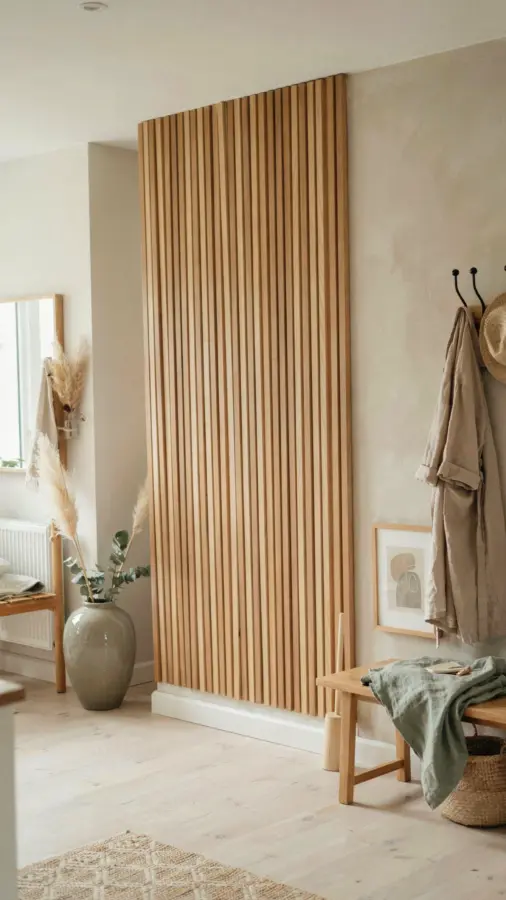
If you follow entryway trends, you already know the search for clean lines and uncluttered walls is bigger than ever. But here is the twist: the most talked about solution this spring is one that you literally cannot see. The invisible sliding door entryway concept combines a hidden door with a modern grille pattern, so the doorway disappears into the wall. No handle, no visible frame, just a seamless surface that keeps your small space feeling open and intentional. I first spotted this idea in a Japanese interior magazine, and now it is popping up in American remodel projects because it solves two annoying problems at once: tight clearance and visual noise.
Why an invisible sliding door works for small entryways
Standard swing doors eat up floor space. In a narrow entryway, that arc of the door can block the coat rack or force you to squeeze past. A sliding door glides parallel to the wall, but most sliders still have exposed tracks and handles that break the visual line. The invisible version hides the door inside a wall grille. You push or pull lightly, and the whole panel moves sideways without any visible hardware.
For small entryways, this is a game changer. You gain back the wall area for hooks, a slim console, or a mirror. The grille itself becomes a design feature, not a mechanical afterthought. Modern aluminum grilles with thin vertical slats echo the look of room dividers or architectural louvers, so the door feels like part of the wall finish. No one will guess there is a closet, pantry, or even a tiny powder room behind it.
How the modern grille style solves the pull problem
Most hidden doors rely on a push latch or a magnetic catch, but you still need a way to grab the door to slide it. The grille style solves this elegantly. The slats themselves provide natural finger grips, especially if you leave a small gap between the grille and the adjacent wall. You hook your fingers into the open slots and slide. No handle to protrude, no pull to catch your sleeve.
I have seen two variations in recent installations. One uses a full wall of vertical aluminum slats with a single movable section. The other uses a repeating grille pattern across the whole wall, and the door section is slightly recessed with a narrow finger channel cut into the topmost slat. Both look identical when closed. The key is to match the grille spacing and color to the rest of the wall, whether that is painted drywall, wood paneling, or tile. Aluminum is popular because it is light, durable, and can be powder coated in any matte or satin finish.
Best placement ideas for a hidden door in your entryway
Where you place the invisible sliding door matters as much as how it looks. The most common use is a coat closet or mudroom that sits directly off the entry. By hiding the door, the wall stays clean, and the coats stay out of sight. Another smart spot is covering a shallow storage nook for shoes, umbrellas, or mail sorting bins. You can even use it to hide a utility area like a circuit breaker panel or a small HVAC return.
- Behind a long mirror: mount the grille door so it aligns with a full length mirror on the adjacent wall. The grille reflects light and visually expands the space.
- At the end of a hallway: turn a dead end into a hidden linen closet or a tiny home office. The grille becomes an architectural accent.
- Next to a console table: place the door beside a slim table with a lamp. The grille adds texture, and the door doesn’t interfere with the table’s depth.
For rental spaces, check with your landlord first. A grille door on a sliding track is less invasive than cutting a new opening, but you still need to modify the wall slightly. Some designs use a floor mounted track that requires minimal drywall work.
Spring and summer trends that make this door shine
This spring, the trend is about soft, warm neutrals and natural light. An invisible sliding door with a light beige or warm gray grille blends perfectly with walls painted in creamy whites or pale sage. The grille slats break up the flat wall surface without adding visual weight. Summer brings a focus on airflow and indoor outdoor connection. If your entryway leads to a patio or a side yard, a grille door with wider slats can allow passive ventilation while keeping the space private.
I have also noticed a shift toward lower contrast. People are choosing grille finishes that closely match their wall color instead of bold black or dark bronze. A matte white grille on a white wall looks like a continuous surface. A light wood tone grille on a warm beige wall adds subtle texture. This is the opposite of the farmhouse trend where you wanted visible barn doors to stand out. Now the goal is to make the door disappear until you need it.
Installation tips for a sliding door that blends into your wall
Installing an invisible grille door is not a weekend project for a beginner, but it is manageable with some planning. First, measure the opening width and height carefully. Standard sliding door kits work for openings up to
#hiddenentryway #invisibledoors #entrywayideas #slidingdoordesign #modernentryway
Leave a Comment