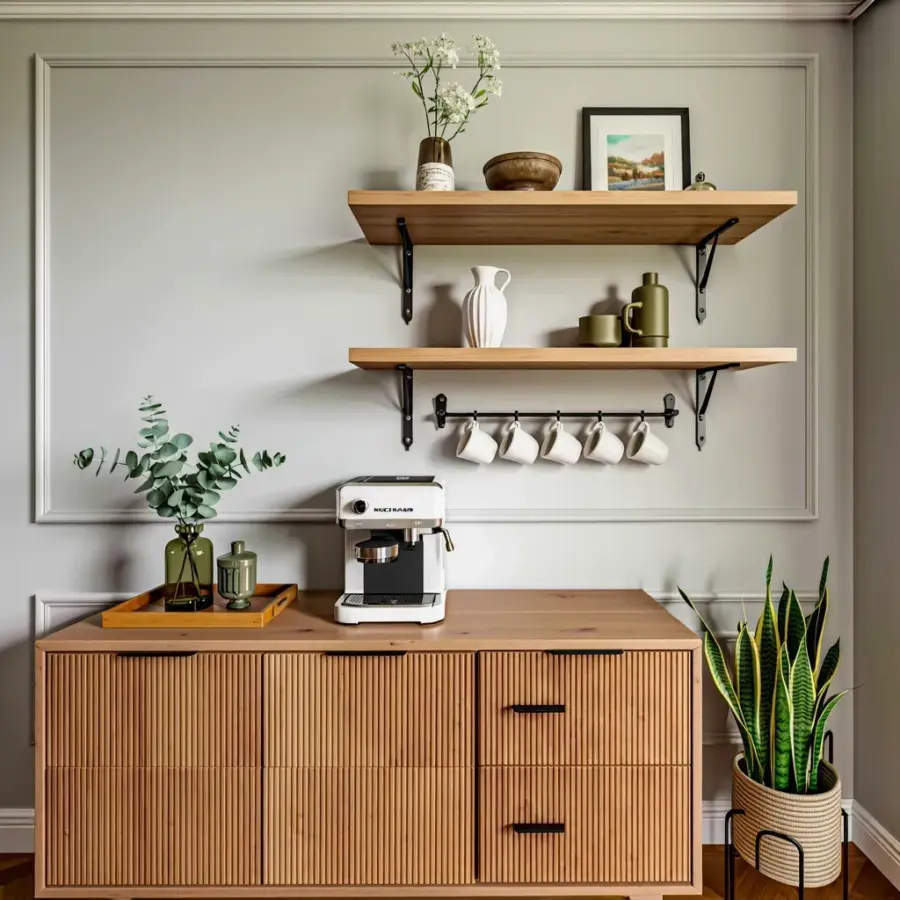
The front door swings open, and you’re already stepping sideways to avoid a pile of shoes and a coat that missed the hook. That’s the reality for most small entrance halls, and honestly, it’s fixable. The best small entrance hall ideas don’t require a remodel or a professional organizer. They just require noticing where you keep putting things down, or dropping them, and giving those spots a stylish upgrade.
Mistake #1: You’re Shopping for a Hallway That Doesn’t Exist
Most small entrance halls are really just a rectangle with a door. A wide console table that looked beautiful in the showroom will block the path the moment you bring it home. I’ve done it, and I still wince when I think about returning that thing. Measure your actual walking clearance first, then look for a slim console, something around 12 to 15 centimeters deep. That little shelf gives you a spot for keys and a vase without eating the room.
Skip the floor lamp too. Mount a small wall light above the console instead. It frees up floor space and makes the whole area feel taller. These are the small entryway ideas for narrow halls that people don’t mention in pretty Pinterest captions, but they work.
Mistake #2: Hanging Everything at Eye Level
Hooks placed at adult shoulder height seem logical, until you see what that does to a narrow wall. Coats and bags bunch up in your field of view, and suddenly the entrance feels like a crowded cloakroom. Floating hooks installed higher up, closer to the ceiling, pull the eye upward and keep the wall below clear. You can still reach them, just use that last bit of wall near the top.
Better yet, install a horizontal rail with sliding hooks. That way you can move coats around without leaving permanent marks all over the wall. A row of floating hooks at staggered heights also gives you a spot for dog leashes, hats, and that one scarf you refuse to throw away. Not gonna lie, I have a hook just for my umbrella because it never dries anywhere else.
Mistake #3: Skimping on the Mirror
A small mirror seems practical, but a big mirror near the door does something sneaky. It reflects the rest of the room, so your cramped entrance borrows visual space from the hallway or living area beyond. One large mirror leaning against the wall, not bolted flat, can make the whole entry feel twice as wide. If you can angle it slightly toward a window, even better.
While you’re at it, check what’s on the wall opposite the mirror. If it’s a blank white wall, the mirror just reflects blankness. Here’s the thing, a mirror works hardest when it faces something with a bit of color or texture. A small shelf with a plant or a stack of books does the job.
Mistake #4: Parking Shoes Right in the Walkway
We all kick off our shoes at the door. Then they stay there, breeding into a pile that triples in size by Sunday. Instead of fighting it, give the shoes a designated spot that doesn’t block the path. A shallow shoe rack that sits under the console, not beside it, keeps them out of the way and still within easy reach.
For a truly cramped space, try an over-the-door shoe organizer on the inside of the hallway door. It’s not elegant, but it hides a shocking number of shoes. And if you need actual seating, a slim bench with a lift-up top can hide the messy pairs inside. Use the bench for morning shoe-tying, then hide everything before guests arrive.
- Keep only the shoes you wear weekly at the entrance.
- Move seasonal pairs to a closet or under a bed.
- Give each person one designated slot. That’s it.
Mistake #5: Forgetting the Floor Has a Job
A narrow runner that just covers the direct path might seem obvious, but most people buy one too long. You end up with a rug that bunches under the door or curls at the edges. Measure the width of your entrance and pick a runner that leaves a visible gap of floor on both sides. That gap makes the space look larger by showing you exactly where the walkway ends.
Also, consider the material. A thin, flat-weave runner is easier to clean and won’t trip you when the door opens. I once had a thick shag runner in a rental, and every time I came home with groceries, the door would catch on it. I still have a small scar on my ankle from that thing.
Mistake #6: Leaving the Walls Blank and the Floor Cluttered
An empty wall sounds minimal, but it usually means stuff ends up on the floor. Keys, mail, sunglasses, loose change, all of it lands in a random heap by the door. Fix that by adding a small wall-mounted tray or a few shallow baskets at the side of the entrance. They take up zero floor space and catch the clutter before it spreads.
You can also use the vertical space above the door frame. A floating shelf up there, yes, really, is perfect for storing things you don’t need daily. I keep extra light bulbs and a spare door key up there. Nobody sees it, and I always know where to find them.
There’s one more trick that ties everything together. Paint the ceiling the same color as the walls or go one shade lighter. It makes the entrance feel taller and less like a cramped tunnel. Then add a warm light bulb, because white daylight bulbs can make a small space feel clinical and cold. Honestly, lighting matters more than any fancy decor.
Once you stop treating your small entrance hall like a regular-sized room, it gets easier. Focus on the spots where stuff naturally lands, then give those spots a clever home. You don’t need a huge renovation or expensive built-ins. A few floating hooks, a large mirror, and a slim console will change how the whole entry feels when you walk in.
So take a look at your own door area. Is there a pile of shoes you’ve been ignoring or a wall that’s just empty? Start with one mistake, fix it this weekend, and then move to the next. Your small entrance hall will thank you, and so will the person carrying groceries through it. If you try one of these ideas, come back and tell me how it went. I’d love to hear which one made the biggest difference.
Leave a Comment