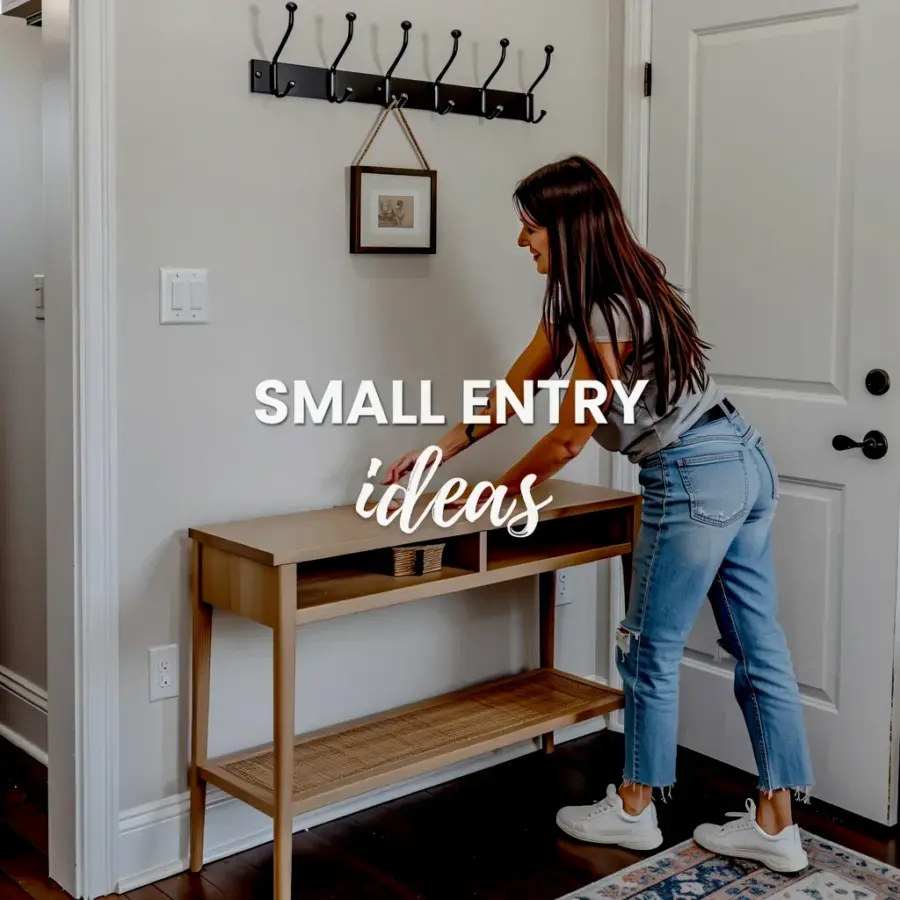
If you are searching for small entryway ideas on a budget, you already know the struggle: a narrow hallway, a stack of shoes, and nowhere to drop your keys. I have been there. My own cramped entry felt more like an obstacle course than a welcome mat. Then I scored a slim console table from Facebook Marketplace for twenty dollars, added a thrifted runner, and built my own set of simple DIY peg hooks. The whole refresh cost less than a nice dinner out, and now that tiny space actually works. Here are the specific pieces and strategies that made it possible, broken down by theme.
Finding the Perfect Narrow Console Table on a Budget
Your first anchor piece is usually a console table, but the standard 16-inch depth is too much for a tight hall. Look for something between 8 and 12 inches deep. I found mine by searching “skinny console” and “small hall table” on Facebook Marketplace. Another trick is to search for “sofa table” because those are often long and shallow.
If you cannot find a preloved piece, consider a simple IKEA shelf hack. A Lack shelf mounted at standing height works as a slim ledge. You can add hairpin legs to a wooden board for about fifteen dollars. The key is to keep the visual weight low. A darker wood tone hides scuffs, but a painted white or pastel console reflects light and makes the hall feel wider.
- Set a width limit (24 to 36 inches is ideal for a small wall).
- Look for solid wood, even if the finish is beat up. A quick sand and paint costs little.
- Measure your hallway before you buy. Leave at least 18 inches of walking space next to the table.
Thrifting a Runner That Makes the Space Look Larger
A runner does more than protect your floor. It visually lengthens the room. I picked up a 2×6 foot wool-blend runner at a thrift store for eight dollars. It had a faded geometric pattern that echoes the lines of the console. For a budget runner, look for high-contrast patterns: zigzags, stripes, or small diamonds. Solid dark colors show every bit of dirt.
If you cannot find a runner secondhand, a low-pile indoor/outdoor carpet cut to size works well. Use carpet tape to hold it in place. Avoid thick shag runners in a narrow space. They trap dust and make the floor feel smaller. A flat weave is easier to vacuum and looks crisp under the console legs.
Simple DIY Wall Hooks That Add Storage and Style
Store-bought coat racks are bulky and expensive. I built my own peg hooks from a scrap piece of pine and six wooden knobs from the hardware store. Total cost: under twelve dollars. I sanded the board, painted it with leftover wall paint, and screwed the knobs into pre-drilled holes. Mount it at about 54 inches from the floor so bags and jackets hang without dragging.
Another low-cost idea is using a metal pipe flange as a hook. You can find flanges at the plumbing section for a few dollars each. Screw them directly into the wall, spaced 6 inches apart. They have an industrial look that pairs well with a wooden console. If you rent, use command hooks on a painted board instead of drilling into the drywall. The board itself can be hung with two screws, and you take the whole assembly down when you move.
Adding a Mirror Without Breaking the Wall or the Bank
A mirror in a small entryway doubles the light and tricks the eye into seeing more space. But mirrors can be pricey. I found an old window frame at a flea market for ten dollars, cleaned it, and dropped in a piece of mirror cut to size at a glass shop (fifteen dollars). I attached picture hanging wire to the back. It looks custom for a fraction of the cost.
Alternatively, look for an oval or round mirror at a garage sale. A scratched frame can be spray-painted in a metallic finish. Hang it directly above the console, centered between the bottom of the mirror and the table top should be about 4 to 6 inches. That way you can see yourself without leaning over the table.
Baskets and Bins to Keep Clutter Hidden
Open shelves on a slim console look messy fast. I use two small woven seagrass baskets to catch wallets, mail, and dog leashes. Baskets from thrift stores often cost a dollar or two. If the weave is loose, you can line the inside with a piece of old fabric. Another option is a set of metal bins from the dollar store spray-painted in a matte finish.
For upper wall space, add a small shallow shelf above the hooks. I store a few decorative books and a ceramic dish for keys. The shelf should be no deeper than the console to keep the silhouette clean. Use the same wood tone as the console or a contrasting black for visual rhythm.
A Small Plant or Two for Life and Color
A living element softens the entryway. I keep a small snake plant on the corner of the console. It survives low light and infrequent watering. If you have no natural light near the door, use a dried eucalyptus bunch or a faux succulent in a terracotta pot. The goal is to avoid another clutter pile. One single plant, about 8 to 10 inches tall, is enough.
If the console is very narrow, try a wall-mounted planter next to the mirror. A simple air plant in a glass orb adds green without taking up surface space. Do not use trailing ivy in a tight hallway unless you want to trip over vines every time you come in with groceries.
Putting It All Together on a Shoestring
Start with the console and the mirror as your visual anchor. Then add the hooks on the empty wall space next to it. The runner should run parallel to the console, not underneath it, so the table sits on the floor directly. Place one basket on the lower shelf (if your console has one) and the plant on the top surface. Leave the other end of the console empty or put a small tray for change.
Use consistent colors throughout. If your console is dark walnut, go for a warm cream runner and brass hooks. If you paint the console white, choose black metals and a gray runner. That repetition makes the budget items look intentional. Test the layout by taping the hook positions on the wall first. Stand back and adjust heights before you drill.
The whole project took me a weekend and about forty dollars. Now my entryway feels like a proper drop zone, not a cluttered hallway. If you try a similar approach, start with the Facebook console find and the DIY hooks. Those two pieces do the heavy lifting. Everything else is just polish.
Save this post for the day you decide to tackle your own hall. The secret is to shop secondhand first and build the rest yourself. It is calmer, cheaper, and you end up with a space that truly works for how you live.
#smallentryway #entrywaydecor #budgetdecor #diys #smallspace
Leave a Comment