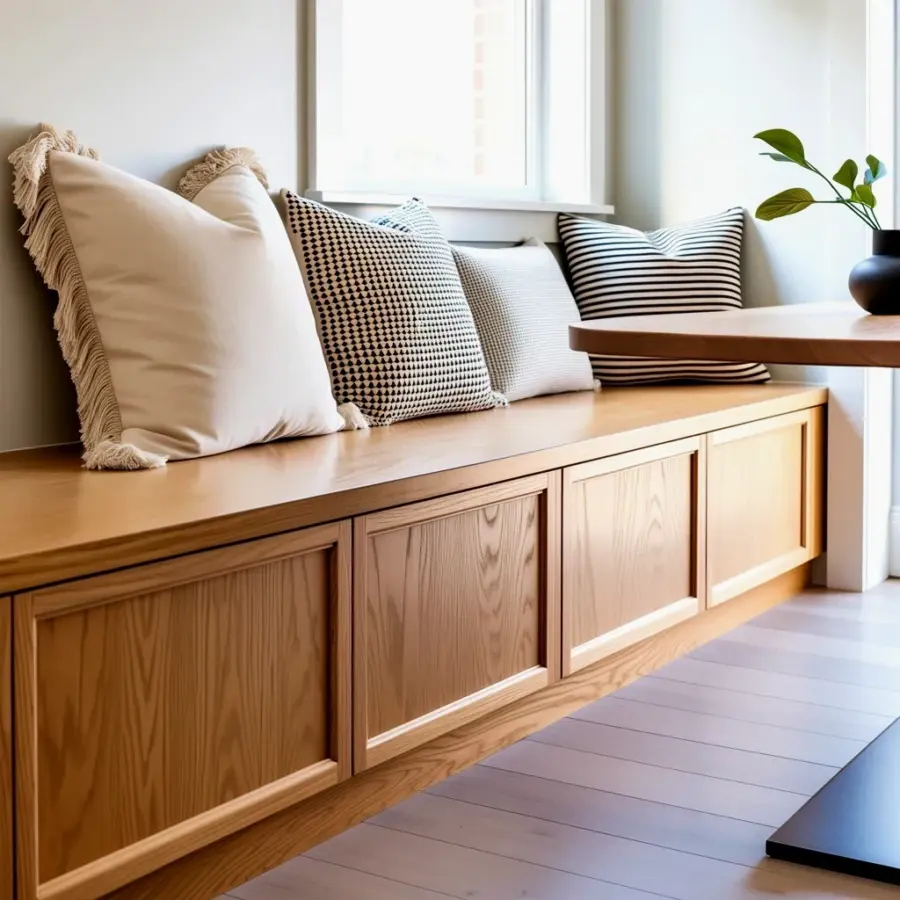
If you have a tiny foyer, you probably know the struggle of trying to fit in all the furniture you think you need. Here is the small entryway mistake I see over and over again: packing in a bench, a console table, a shoe rack, and maybe even an umbrella stand. It sounds practical, but what actually happens is the space feels cramped, narrow, and anything but welcoming. The fix is simpler than you think, and it has nothing to do with buying new storage gadgets. It’s about choosing one anchor piece and letting the rest of the floor breathe. This visual breathing room makes a tiny foyer feel noticeably bigger, more organized, and honestly more inviting. Save this tip for your next entryway design refresh, and let me walk you through seven themed ideas to help you get there without the overwhelm.
1. The One Anchor Rule: Why Less Furniture Makes a Tiny Foyer Feel Bigger
This is your main entryway mistake to fix first. The typical small entryway gets filled with three or four separate pieces of furniture, each competing for floor space and attention. Instead, pick one anchor piece that will do most of the heavy lifting for your tiny foyer. A slim console table works great if you need a drop zone for keys and mail. A narrow bench works better if you sit down to put on shoes. That single piece becomes the star, and everything else either goes on the wall or stays out of the room entirely. Here is what that edit looks like in real life:
- Remove the bulky shoe rack and store shoes in a slim basket under the anchor piece.
- Skip the separate coat rack and install wall hooks behind the door.
- Take out the loose stool and rely on the bench or console surface alone.
- Leave at least 18 inches of clear floor space around the anchor piece.
By committing to one anchor, you immediately cut visual clutter. Your tiny foyer will look twice as spacious without actually changing its dimensions. This is a proven smallspacehack that works in any entryway, no matter how tight.
2. Wall Mounted Wonders: A Narrow Shelf That Replaces a Console Table
If you are hoping for a surface to drop keys and mail but don’t want a full console table taking up floor space, a wall mounted shelf is your best friend. Choose a narrow shelf that is no deeper than eight inches. Mount it at waist height so it feels intentional and doesn’t block the path. This entryway design trick gives you a functional landing zone while keeping the floor completely clear. You can add a small mirror above it for checking yourself on the way out, and that is your entire setup. No legs, no bulk, no tripping hazard. For a tiny foyer, a floating shelf paired with a single hook below creates a mini station that feels airy and deliberate. It visually lifts the furniture off the ground, making the floor area look bigger.
3. One Mirror, No Furniture Needed: The Instant Space Expander
Sometimes the best way to avoid over furnishing your small entryway is to skip furniture entirely and lean on a mirror. A large mirror leaned against the wall or mounted flush makes a narrow hallway feel twice as wide. It reflects light and tricks your eye into seeing more depth. This is a huge entryway mistake reversed, because most people reach for a table first. Instead, make the mirror your anchor piece. You can add a small tray on the floor or a single peg for a jacket, but nothing else. This approach works best in extremely tight spaces where even a thin console would block the flow. The mirror alone adds function (last look before leaving) and drama without crowding your tiny foyer. It is one of the most underrated smallspacehacks I know.
4. The Shoe Squeeze: Where to Store Footwear Without a Separate Rack
A dedicated shoe rack in a small entryway is often the biggest culprit of clutter. It takes up floor space, sticks out visually, and usually ends up overflowing. Instead of making that classic entryway mistake, integrate shoe storage into your one anchor piece. If you choose a bench, select one with built in cubbies underneath. If you choose a slim console, place a shallow woven basket underneath for daily shoes. Keep only the current season’s footwear down there, and rotate the rest to a closet. Another idea is to use an over the door shoe organizer on the inside of your entry closet door. This keeps the floor completely bare while still having space for flats, sneakers, and boots. Your tiny foyer will look tidy because the shoes are hidden, but still accessible. That is smart entryway design that doesn’t sacrifice function.
5. Bench vs. Chair: Why a Single Seat Is Better Than a Long Bench
Here is a question I hear a lot: should I get a bench or a chair for my small entryway? Many people go for a bench because they imagine sitting with a partner or putting on shoes simultaneously. But in a tiny foyer, a long bench often juts into the walking path and feels like a wall. A single accent chair, especially one with a slim profile and no arms, takes up less visual mass. It gives you one seat that is comfortable and intentional. You can place it at an angle to create a softer corner, or keep it flush against the wall. The rest of the floor stays clear. This is a simple entryway design swap that avoids the bulky look of a bench. If you really need seating for two, consider a small folding stool that you can tuck away when not in use. That way your tiny foyer stays flexible and never feels crammed.
6. Go Vertical: Tall Storage for Coats and Bags Without Cluttering the Floor
When you can’t add floor furniture, go up. Tall, narrow storage like a slim coat rack or a wall mounted peg rail keeps the floor open while giving you a place for jackets, scarves, and bags. This is a fantastic smallspacehack for entryway design because it uses vertical real estate that is otherwise wasted. Choose a coat rack that has a small footprint, no more than 12 inches wide and with a weighted base so it doesn’t tip. Alternatively, install a row of four or five sturdy hooks at different heights. You can hang kids’ jackets lower and adult coats higher. Add a small shelf above the hooks for hats and gloves. This entire setup takes up zero floor space except for the base of the rack, which you can position in a corner. Your tiny foyer will have all the function of a mudroom without the bulky furniture that makes it feel tight.
7. The Edit Down: What to Remove When You Still Want a Console Table
Let’s say you really want a console table in your small entryway. That is fine, but you have to edit everything else to make it work. The entryway mistake here is keeping the table plus a bench plus a shoe rack plus a coat rack all at once. Instead, commit to the console and remove every other piece of floor furniture. Place a slim mirror above it, a small bowl for keys on top, and a single plant or lamp for warmth. Underneath, keep the area completely empty. No baskets, no shoes, no bags. That empty floor space is what creates the illusion of a larger tiny foyer. You can also choose a console with a very narrow depth, six to eight inches, so it barely protrudes into the room. This is a conscious entryway design choice that prioritizes openness over maximum storage. Your foyer will feel bigger because your eye sees clear floor, not a pile of legs and stuff.
At the end of the day, the secret to making a tiny foyer feel bigger is subtraction, not addition. Each of these themed ideas asks you to pick one piece, use the walls, and leave the floor open. That visual breathing room is worth more than any extra shelf or bin. Next time you look at your small entryway, try removing half the furniture and see how instantly lighter it feels. You might be surprised at how little you actually need. Give it a shot, and let me know which tip worked best for your space.
#smallentryway #entrywaydesign #tinyfoyer #entrywaymistakes #smallspacehacks
Leave a Comment