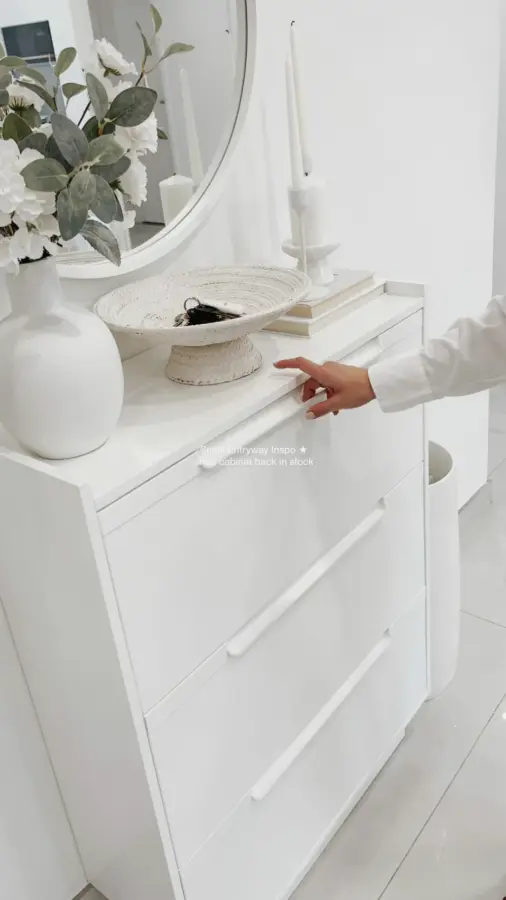
If you live with a narrow hallway or a tiny foyer, you already know the struggle. A small entryway shoe cabinet can be the one piece of furniture that changes everything. I have a cramped entryway myself, and for months I kept tripping over sneakers and boots. Once I found a slim shoe cabinet that fit between the door and the wall, the mess disappeared. Now I want to walk you through the exact steps I used to make my narrow entryway work harder, without sacrificing style or floor space.
Measure your space before you buy anything
Grab a tape measure before you even open your browser to shop. Narrow entryways often have odd dimensions, and a cabinet that looks slim in a product photo might still be too deep for your corner. Measure the width, depth, and height of the spot where you want the cabinet to live. Don’t forget to check for baseboards, light switches, and door swing clearance.
In my own hallway, I only had 11 inches of depth to work with. Most standard shoe cabinets are 12 to 15 inches deep, so I had to hunt for an ultra-slim model. Look for cabinets labeled “slim” or “narrow” specifically, and read the dimensions in the description. If the depth is over 10 inches, measure your space again to be sure. You want the cabinet to sit flush against the wall, not stick out into the walkway.
Choose the right shoe cabinet style for tight corners
Not all compact shoe cabinets are created equal. You’ll find tilt-out drawers, flip-down doors, and open shelves. For a narrow entryway, I recommend a cabinet with a slanted or tilt-out front. These models let you access shoes from the top without needing extra clearance for a door to swing open. They also look like a piece of furniture rather than a storage bin.
Here are the most common styles I considered, and what worked best for my space:
- Tilt-out cabinet – great for tight hallways, easy access, and a clean front face.
- Flip-down door cabinet – holds more pairs but requires space in front to open the door.
- Open shelf bench combo – doubles as a seat for putting on shoes, but shoes stay visible.
- Rolling narrow cart – flexible, can be tucked under a console table or moved to clean.
I ended up with a white tilt-out cabinet that holds eight pairs of shoes in a unit only 10 inches deep. It hides everything behind a smooth front, and it matches my trim. Think about what you store most often: heels, flats, sneakers, or boots. Boots need a deeper cabinet, so plan accordingly.
Organize your shoes by frequency of use
Once your cabinet is in place, resist the urge to just toss shoes inside. Take everything out and sort them. Keep the shoes you wear weekly in the most accessible spots, usually the top two tiers. Seasonal or rare-use shoes can go on the bottom shelves or be stored elsewhere. This simple habit keeps your entryway from turning into a chaotic pile.
I use small basket dividers inside the cabinet to separate my running shoes from my work flats. That way I don’t have to dig through a heap to find what I need. If your cabinet has adjustable shelves, move them to fit your tallest pair first. For flats, you can even stack two pairs in one slot using a shoe rack riser. Every inch counts in a narrow entryway.
Maximize vertical storage with a slim cabinet
A small entryway shoe cabinet is already a vertical solution, but you can push it even further. Look for models that go all the way to the ceiling, or stack a matching cabinet on top. I added a narrow shelf above my shoe cabinet for keys, mail, and a small plant. It uses the wall space that would otherwise be empty, and it keeps the countertop of the cabinet clear.
If you cannot find a tall enough cabinet, install a wall-mounted hook rail right above the unit. Hang bags, scarves, or a lightweight basket for extra odds and ends. The goal is to use every vertical inch without crowding the floor. A slim footprint plus height equals serious storage in a tiny area.
Add hooks and trays to complete the entryway
A shoe cabinet alone won’t solve all your entryway clutter. Coats, bags, keys, and mail still need a home. Install a row of sturdy hooks on the wall beside or above the cabinet. Keep a small tray or dish on top of the cabinet for daily essentials like your wallet and sunglasses. This creates a landing zone so you never lose things the second you walk in the door.
I use a shallow wooden tray that fits perfectly on top of my cabinet. It
#smallentryway #entrywayorganization #shoecabinet #narrowentryway #spaceSavingsolutions
Leave a Comment